Showing posts with label Bureau of Environmental Protection. Show all posts

Thursday, December 29, 2011

Maine Lawmakers Slated to Consider BEP Decision


Department of Environmental Protection Rule Ch. 375, Sec. 10 Amendment
Subsection I: Sound Level Standards for Wind Energy Developments

Since the dawn of grid-scale industrial wind energy production, there have been problems; not just here at home, but nationwide and abroad.  To date, every improperly sited wind project in Maine is a party to litigation or ongoing and serious complaints.
In the autumn of 2010, the Citizens’ Task Force on Wind Power (CTFWP), in accordance with Maine Law, submitted almost twice the sufficient number of verified petitions to the Board of Environmental Protection to require Agency Rulemaking on the subject of noise from Wind Energy Developments.  DEP Noise Rules, last amended more than 20 years ago, were inadequate to protect Maine citizens from industrial wind turbines’ unique noises and vibrations.   In an attempt to protect Maine citizens’ health, property values and quality of life, CTFWP–in conjunction with Friends of Maine’s Mountains (FMM) –launched a determined effort calling for revised noise rules for grid scale wind facilities.
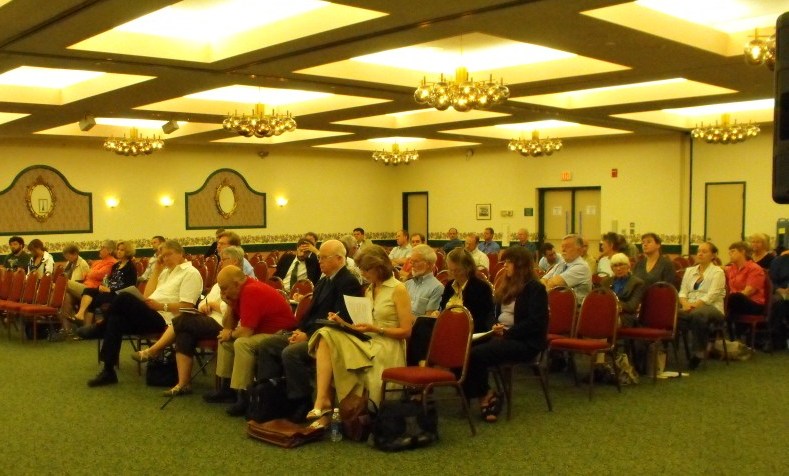
FMM submitted comprehensive draft amendments to the BEP, citing an urgent need to change existing Noise Rules to improve predictive modeling and protect against health risks associated with noise from industrial wind turbines.  In response to the citizens’ initiative, BEP held technical and public hearings in Augusta on July 7, 2011.

The claims made by CTFWP and FMM were supported by the testimony of several respected and experienced acoustics experts, including Rick James, Rob Rand and Stephen Ambrose.  These gentlemen have not relied on computer modeling to arrive at their findings.  They have done--and continue to do--extensive testing at wind turbine sites in Maine and across the country.  They have spent nights in affected homes, as well.  Added to their findings was the testimony of Dr. Michael Nissenbaum—another respected professional who has had first-hand experience with the impacts of wind turbine noises as he has treated sufferers right here in the state of Maine.  Following the testimony of these experts, scores of Maine citizens gave oral and/or written testimony about wind turbine noises and their impacts to health, property values and quality of life.  BEP found it incumbent upon them to support an amendment to the State’s current noise rules and had staff prepare a draft rule change.
 
On September 15th, in spite of late-in-the-game and undue pressure from attorneys representing the corporate wind lobby, the Board of Environmental Protection voted to approve more restrictive sound standards for wind energy developments. The Board recognized the fact that Maine citizens are already suffering from the impacts of wind turbine noises and they voted to implement new parameters for Ch. 375, Section 10 rules which are more stringent than those previously in effect.

From the start, the Wind Lobby took no notice of the BEP’s directive to refrain from arguing the pros and cons of ‘wind’ during testimony.  They touted the jobs they have brought to Maine—ignoring the fact that those temporary jobs exist because of mandated federal, state and local tax-payer subsidies.  In addition, by wind developers’ own accounts we know that wind energy facilities will not create more than a handful of full-time, permanent technicians’ jobs, statewide.  Studies done in Europe show that each ‘renewable’ job created cost more than $1,000,000.00 in government subsidies, and resulted in the loss of 2.2 conventional jobs.  Denmark, with its high percentage of wind facilities, pays some of Europe’s highest energy tariffs—more than twice those in Britain–partially due to wind subsidies.  It is expected that the wind industry will cite those who are employed in the construction of wind facilities when they lobby the Legislature to vote against the BEP’s recommendations, but it ludicrous for the wind industry to use ‘jobs’ to justify the negative impacts brought about by their product.

The wind lobby also warned the BEP that if it ‘changed the rules’ mid-stream the ‘investors’ would go elsewhere.  Rather than discuss how to reduce the negative impacts of their product, the wind industry proceeded to lecture BEP about Maine’s economy.

BEP recognized that it was not the Board’s responsibility to worry about Maine’s financial circumstances or the wind lobby’s impact thereon—whether positive or negative.  Rather than being drawn into that debate, BEP considered the expert and public testimony and then voted to amend the noise rule standards.

During the last 3 years, many Maine communities have passed comprehensive and protective moratoria and wind energy ordinances.  Towns such as Jackson, Dixmont, Thorndike, Montville, Phillips, New Vineyard, Buckfield, Wilton, Stockton Springs, Sedgwick, Penobscot, Avon, Eddington, Unity, Eastbrook, Rumford, Prospect, Brooksville, Deer Isle, Temple, Frankfort and Caratunk have all recognized that grid-scale wind energy facilities are not benign and must be carefully considered during the zoning and siting process in order to protect the health, property values, and quality of life of Maine residents.
Citizens request that the 125th Legislature show their confidence in the People of Maine and in the members of the Board of Environmental Protection and vote to uphold the BEP’s noise rule amendments.


Monday, July 18, 2011

Voices on Noise

This, and subsequent postings, are testimonies from Mainers, provided to the Bureau of Environmental Protection, in response to a Public Hearing activated by a citizens' petition, and held on July 7th in Augusta, for Noise Rule Changes pertaining to wind turbines.
********************

My name is Karen Bessey Pease and I am a resident of Lexington Township.

On Thursday, July 7th, the Bureau of Environmental Protection will hear technical and lay testimony regarding industrial wind turbine noise.  I thank you for allowing me the opportunity to comment on the proposed noise rule amendment.

In the pre-filed testimony submitted by Juliet Browne of Verrill Dana LLP, Ms. Browne states “These limits are fully protective of human health and there is no credible scientific evidence to the contrary.”

I am acquainted with many Maine citizens who are suffering from the effects of wind turbine noise, and they are very ‘credible’ people.  Many of them are citizens who, at the outset, fully supported the wind developments proposed for their communities.  It was not until they were subjected to the sounds produced by the turbines that they began to attempt to seek relief.  They did not have an agenda and they did not expect that their lives would be turned inside-out; but once the facilities went online, they began to suffer in many ways.  Their health and their finances have been negatively impacted and their quality of life is diminished.

“Credible scientific evidence…” 

We cannot ‘prove’ pain, but we know it exists.  Doctors routinely treat their patients when they complain of acute or chronic pain.  They don’t dismiss them because they cannot see or hear or feel their pain.  The patient’s complaint is sufficient ‘credible evidence’ for the doctor to provide relief.  When a man complains of numbness or tingling, or ringing in his ears, or phantom shadows in his vision, he is not ignored.  These complaints, while not able to be proven, are treated.  Why, then, are complaints of health problems due to turbine noises given little or no credence?

The fact that dozens of Mainers are negatively affected by wind turbine noise should be enough—and in fact, by standards of humanity, it IS enough—to make this issue one which must be addressed and alleviated.

Ms. Browne states “…the question before the Board is what level of sound impact is reasonable and strikes an appropriate balance between allowing development, including wind power, and protecting existing uses.”

The ‘existing uses’ she speaks of are Mainers’ homes.  For many of the victims, their homes are their major (or only) investments—investments of money, time, and emotion.  These ‘existing uses’ are absolutely worthy of protecting.  When a citizen is not able live in good health and with enjoyment of ‘home’, there is no impact that is ‘reasonable’ and no ‘balance’ that is ‘appropriate’.  Wind developers do not have the right to initiate a ‘taking’ of citizens’ properties.  They do not have the right to cause a citizen to suffer serious health problems.

Ms. Browne directs the Board by saying you “must consider the benefits of that type of development.  Wind energy provides not only energy and environmental benefits, but substantial economic benefits to the people and businesses in the State of Maine.”

The citizens who petitioned for this hearing have intended to stay ‘on topic’; realizing that this venue is not the proper one to debate the pros and cons of industrial wind development.  However, since Ms. Browne has opened that door, it is important to mention that last month the Legislature passed LD 1366, “And Act to Update the Maine Wind Energy Act…”  The Energy, Utilities and Technology Committee, the same committee of which Ms. Browne’s husband is a member, voted “Ought To Pass” on this bill, which directs the Governor’s Office of Energy Independence and Security to undertake an assessment of progress on meeting the wind energy development goals pursuant to PL 2007, chapter 661, section A-8.  Due to many serious issues raised in public hearings during the spring Session of the 125th Legislature, the OEIS is charged with considering several specific issues regarding wind development, including, but not limited to: an evaluation of the accuracy of the estimates generated by State agencies and wind energy developers for greenhouse gas reductions that are a result of wind energy development in Maine; and the number of turbines necessary to meet the goal, market conditions, development trends, emissions goals, siting policies, cumulative impacts or other factors that may indicate it is necessary to amend the wind energy development goals.  The OEIS is also charged with considering whether places should be removed from the expedited permitting area, including, but not limited to, mountain area protection sub-districts, as defined by the Land Use Regulatory Commission rules, Chapter 10. Also, the OEIS will study the economic impacts of wind energy development on the tourism industry, and evaluate the costs associated with transmission upgrades for the purpose of transmitting wind energy, as well as decommissioning plans and visual impacts.

As you can see, the ‘benefits’ Ms. Browne extols are presumptions, only.  Whether or not they actually exist is not yet proven.

Ms. Browne states “Pursuant to their home rule authority, municipalities may adopt local ordinances regulating sound emissions and other aspects of wind energy development.”

Ms. Browne is correct, and many Maine communities have, in fact, done exactly that.  They have enacted protective wind ordinances.  One point of significance is that wind developers—including First Wind, which Ms. Browne recently represented in the Bowers/Champlain Wind Public Hearings in Lincoln—routinely oppose protective wind ordinances in every town they target for grid-scale wind facilities.  Their actions as they attempt to ‘control the scene’ often create divisiveness within these communities, and it is disingenuous for Ms. Browne to imply that ‘home rule’ (unless it works in their favor) is something which wind developers espouse. 

Even as Maine municipalities are taking proactive measures to protect their residents and define their communities, it is reasonable to assume that most town Select Boards, Assessors and Planning Boards do not understand the science of ‘noise’—whether it is of high, low, or ultra-low frequency. Just as the State sets minimum standards for shore land zoning, allowing towns to enact more stringent standards within their borders; so do communities look to the professionals at the State level for guidance on complicated topics such as ‘sound’.  By invoking the ‘home rule’ argument, Ms. Browne is attempting to divert the Commission’s attention with a reasonable-sounding argument about the basic rights of municipalities to self-govern.  Such statements might be credible if wind developers stepped back and allowed communities to adopt wind ordinances without their ‘input’, and without those developers exerting unwarranted pressure on the voters in those communities.

While reasonable individuals anticipate and expect some level of disturbance from industrial development, I believe it is fair to say that none of the current victims of wind turbine noise could foresee the huge impact this phenomenon would have on their health and quality of life.  They did not expect to suffer through endless nights of sleeplessness.  They did not anticipate living lives wherein they craved moments of stillness in which no breeze blew.  They had no idea that their homes would become prisons instead of sanctuaries.

In her argument, Ms. Browne invokes the Freedom, Mars Hill and Vinalhaven wind projects and directs the Board to dismiss the complaints which have resulted from those wind facility sites.  In the case of Freedom, she accurately states that the Beaver Ridge development was not subject to Site Law permitting.  That does not make Freedom residents’ suffering acceptable.  In Mars Hill, she is correct in stating that a variance was granted.  That ‘granting’ does not make the Mars Hill residents’ suffering acceptable.  And on Vinalhaven Island--because Fox Island Wind has already been determined by the DEP to be out of compliance--she disregards those citizens’ complaints, as if their grievances have been redressed.  They have not.

I am not an expert on sound.  However, I have had the opportunity to talk to many of the residents of Maine who are now victims of noises and vibrations which cannot be predicted, and which cannot be controlled or alleviated when they become unbearable.  If the Wind Energy Plan ordained for Maine comes to full fruition, there will be countless citizens of this State who will become victims of this phenomenon. 

I ask that you listen to the People of Maine and enact stringent sound standards which will protect their health, their property values, and their quality of life.

Thank you.
Karen Bessey Pease
Lexington Township, Maine

*********************